¿La mala calidad del caucho reciclado está perjudicando tus beneficios? El culpable podría ser la fibra.
Si estás en el negocio del reciclaje de neumáticos, tu objetivo es simple: producir polvo de caucho de alta pureza que tenga un buen precio. Pero, ¿qué…
Si estás en el negocio del reciclaje de neumáticos, tu objetivo es simple: producir polvo de caucho de alta pureza que tenga un buen precio. Pero, ¿qué pasa cuando tu producto final no cumple con los estándares? Si enfrentas problemas con una calidad de caucho reciclado por debajo de lo esperado, el problema podría ser menor de lo que piensas—fibras de nylon diminutas, casi invisibles.
El problema oculto en tu polvo de caucho
Durante el proceso de trituración y molienda de neumáticos, especialmente con neumáticos más pequeños, se liberan innumerables fibras de nylon. Cuando estas fibras permanecen mezcladas con tu polvo de caucho, actúan como contaminantes. Esta contaminación afecta directamente las propiedades físicas y la apariencia de cualquier producto nuevo fabricado con él.
- Debilitamiento de la integridad estructural: Las impurezas de fibra interrumpen la unión de las partículas de caucho, lo que conduce a productos más débiles, menos duraderos y más propensos a agrietarse bajo estrés.
- Acabado superficial deficiente: La presencia de fibras puede resultar en una superficie áspera y desigual en productos de caucho moldeados o extruidos, haciéndolos parecer poco profesionales y disminuyendo su valor.
- Rendimiento inconsistente: La polvo de caucho contaminada conduce a resultados impredecibles, lo que puede dañar tu reputación como proveedor confiable de caucho reciclado de alta calidad.
La solución: separación efectiva
En pocas palabras, cuanto menor sea el contenido de fibra, mayor será el valor de tu polvo de caucho. Alcanzar este nivel de pureza no se trata de trabajar más duro; se trata de trabajar de manera más inteligente con la tecnología adecuada.
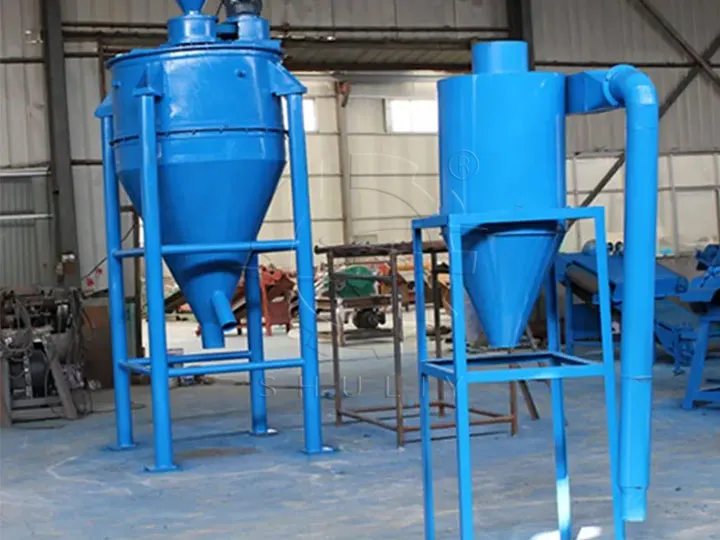
La forma más efectiva de eliminar estas fibras obstinadas es mediante un proceso especializado que las apunta sin dañar el caucho valioso. Los sistemas modernos y avanzados están diseñados para resolver exactamente este problema. Utilizando métodos como clasificación por flujo de aire y vibración, este equipo puede aislar y eliminar las fibras ligeras de las partículas de caucho más pesadas.
Lograr un nivel de pureza superior al 99% no solo es posible; es esencial para cualquier operación seria de reciclaje de neumáticos. Invirtiendo en la tecnología de separación adecuada, no solo estás limpiando tu polvo, sino asegurando una mejor calidad de caucho reciclado, abriendo puertas a aplicaciones más exigentes y, en última instancia, aumentando tu rentabilidad.
If you are struggling to achieve the purity your customers demand, it might be time to analyze your separation process. The key to a better product could lie in a more efficient removal of fiber. Learn more about how you can achieve over 99% purity with a dedicated separador de fibra.