How to Remove Steel Wire from Tires During Tire Recycling
Steel wire removal is one of the most important steps in tire recycling. Whether you are processing passenger car tires, truck tires,…
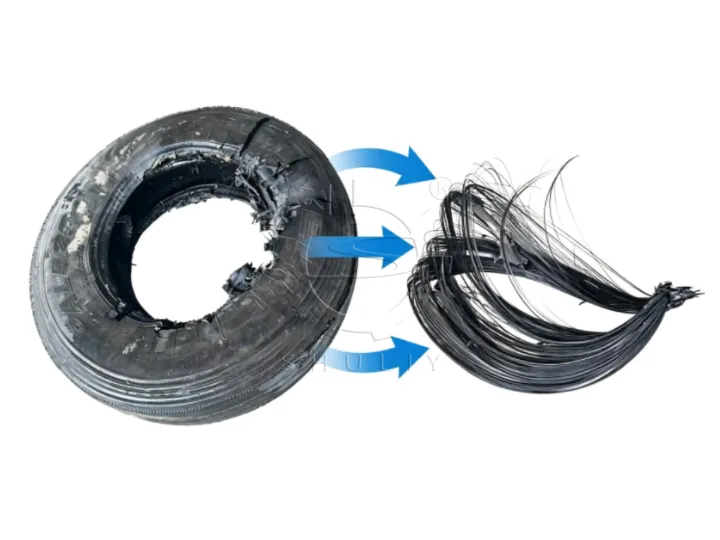
Steel wire removal is one of the most important steps in tire recycling. Whether you are processing passenger car tires, truck tires, or giant OTR tires, effective steel wire removal can improve equipment performance, reduce blade wear, and increase the purity of the final rubber powder.
However, different tire sizes require different steel wire removal methods. In this article, we will explain how to remove steel wire from tires at different stages of the tire recycling process and introduce several proven steel wire removal solutions used in modern tire recycling plants.
Why Is Steel Wire Removal Important?
Tires are reinforced with high-strength steel wire, especially in the bead area. These steel components help tires maintain their shape and strength during operation.
If steel wire removal is not done properly, it can:
- Accelerate shredder blade wear
- Increase maintenance costs
- Reduce rubber processing efficiency
- Affect the purity of crumb rubber and rubber powder
- Damage downstream equipment
For these reasons, professional tire recycling plants usually use multiple stages to remove steel wire from tires to ensure better processing results.
Solution 1: Steel Wire Removal in Semi-Automatic Tire Recycling Lines
For tires smaller than 1200 mm in diameter, many recycling plants choose a semi-automatic processing method for steel wire removal.
Step 1: Tire Sidewall Cutting
The first step is cutting both sidewalls of the tire to separate the tire bead area from the tire body.
At this stage, the steel bead wire remains inside the removed tire sidewalls, so the next steel wire removal step is still required.
Step 2: Bead Wire Separation
The removed sidewalls are then processed using a Tire Bead Wire Separator.
This machine is designed for steel wire removal from the bead area. It separates rubber from the steel bead wire, allowing recyclers to recover clean steel rings while reducing waste.
Step 3: Further Rubber Processing
After steel wire removal, the rubber material from both the tire body and sidewalls enters the next processing stages:
- Tire block cutting
- Tire shredding
- Rubber grinding
- Fiber separation
- Magnetic separation
This solution is widely used by small and medium-sized tire recycling plants because it offers reliable steel wire removal with lower investment cost.
Solution 2: Steel Wire Removal in Fully Automatic Tire Recycling Lines
For higher-capacity operations, fully automatic tire recycling lines offer more efficient steel wire removal methods.
Option A: Tire Wire Drawing Machine
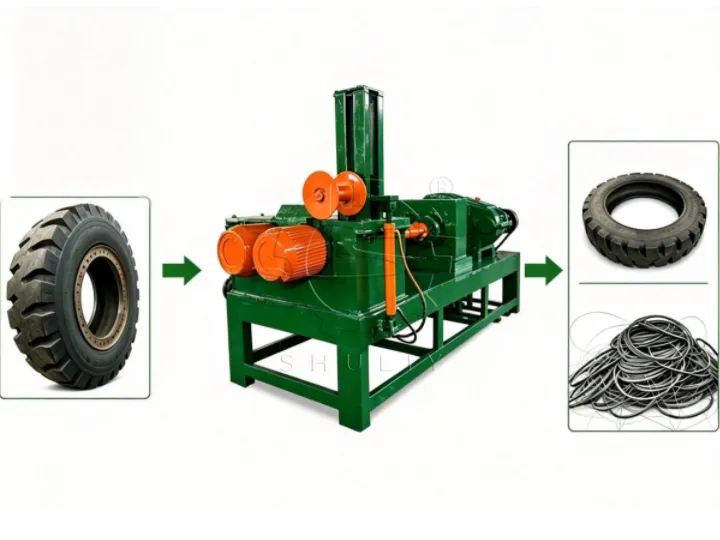
Before shredding, a Tire Wire Drawing Machine pulls out the entire steel bead wire directly from both sides of the tire.
This steel wire removal method offers several advantages:
- Reduces steel content before shredding
- Extends shredder blade life
- Improves downstream processing efficiency
- Increases steel recovery value
After bead wire removal, the tire is sent directly to the shredder and grinding system.
Option B: Tire Ring Cutting and Separation
Some customers prefer using a Tire Ring Cutting and Separation System for steel wire removal.
First, the bead area is cut away from the tire.
The removed bead rings are then processed by a Tire Bead Wire Separator to recover the steel wire.
The remaining tire material continues through the shredding and grinding stages.
Both solutions are commonly used in modern automatic tire recycling plants because they improve steel wire removal efficiency and reduce equipment wear.
Solution 3: Steel Wire Removal for OTR Tire Recycling
Large OTR tires used in mining and construction equipment contain significantly more steel and require specialized steel wire removal equipment.
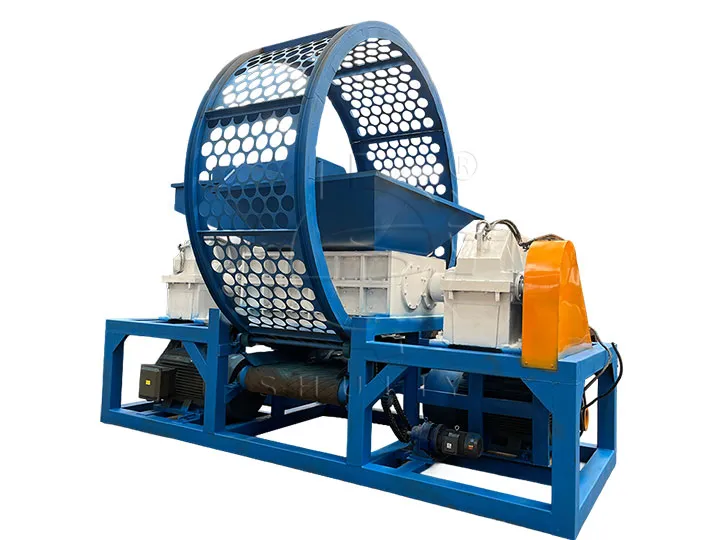
For tires larger than 1200 mm in diameter, standard tire recycling machines are usually not suitable.
Instead, dedicated OTR tire recycling equipment is used for steel wire removal and size reduction.
Máquina de estirado de cables de neumáticos OTR
The machine pulls out large bead wires before further processing. This is the first major steel wire removal step for OTR tires.
OTR Tire Dismantling Machine
The tire is separated into different sections to facilitate steel wire removal and size reduction.
OTR Tire Bead Wire Separator
The bead sections are processed separately to recover steel wire efficiently.
After steel wire removal, the rubber material enters the OTR shredding and grinding system for further processing.
This method reduces equipment load and improves overall recycling efficiency.
Why One Steel Wire Removal Stage Is Not Enough
Many people believe that removing the steel bead wire solves the entire steel contamination problem.
In reality, even after bead wire extraction, small steel fragments remain embedded within the tire structure.
During shredding and grinding, these steel particles can mix with rubber granules and rubber powder.
Therefore, modern tire recycling plants typically use multiple steel wire removal stages to achieve cleaner final products.
Secondary Steel Wire Removal Through Magnetic Separation
To achieve cleaner rubber products, Shuliy’s rubber grinding systems are equipped with multiple magnetic separation units.
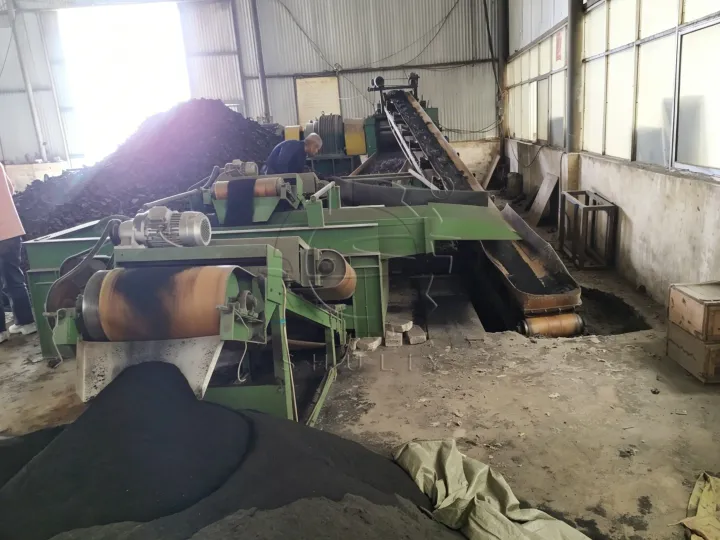
After shredding and grinding, powerful magnetic separators remove fine steel particles that remain mixed with the rubber material. This secondary steel wire removal step is essential for producing higher-purity crumb rubber and rubber powder.
First Magnetic Separation Stage
Removes larger steel fragments released during shredding.
Second Magnetic Separation Stage
Captures smaller steel particles generated during grinding.
This dual magnetic separation design significantly improves steel wire removal efficiency and helps produce cleaner crumb rubber and rubber powder.
Complete Steel Wire Removal Solution for Tire Recycling
An effective tire recycling process usually combines several steel wire removal methods:
For Tires Below 1200 mm
- Tire sidewall cutting
- Tire bead wire separation
- Tire shredding
- Rubber grinding
- Dual magnetic separation
Or:
- Tire wire drawing
- Tire shredding
- Rubber grinding
- Dual magnetic separation
For OTR Tires Above 1200 mm
- OTR wire drawing
- OTR dismantling
- OTR bead wire separation
- OTR shredding
- Rubber grinding
- Dual magnetic separation
By combining bead wire extraction and magnetic separation technology, tire recyclers can maximize steel recovery while producing higher-purity rubber products. This complete steel wire removal process is the key to stable and efficient tire recycling.
Looking for the Right Steel Wire Removal Solution?
Every tire recycling project has different raw materials, tire sizes, and production capacity requirements.
Whether you operate a small semi-automatic plant or a large OTR tire recycling facility, choosing the right steel wire removal process is essential for improving efficiency and maximizing the value of recycled materials.
Shuliy Machinery provides complete tire recycling solutions, including tire wire drawing machines, bead wire separators, OTR tire dismantling equipment, shredders, grinders, and magnetic separation systems. Our engineers can recommend the most suitable configuration based on your production requirements and steel wire removal needs.