Tyre Rubber Powder Making Machine Price: Cost Guide
When searching for a tyre rubber powder making machine price, many buyers expect to find a single number. However, there is no…

When searching for a tyre rubber powder making machine price, many buyers expect to find a single number. However, there is no universal price for a tyre rubber powder production machine.
The final cost depends on several factors, including production capacity, required rubber powder size, machine configuration, and the level of steel-wire separation required.
Understanding these factors can help you compare quotations more accurately and avoid choosing a machine based only on the lowest price.
1. Production Capacity Is a Major Price Factor
The first factor affecting the tyre rubber powder making machine price is production capacity.
A small machine designed for several hundred kilograms per hour naturally requires a different configuration from a system producing more than 1 ton per hour.
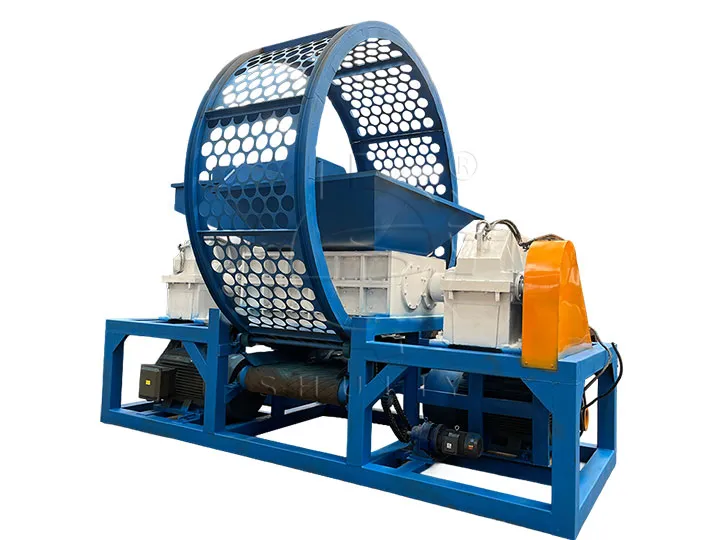
Shuliy offers several rubber powder grinding machine models, including SL-350, SL-400, SL-450, SL-560, SL-560D, and SL-660. Their output varies according to the required mesh size.
For example:
- SL-350: up to 250–300 kg/h at 10 mesh
- SL-450: up to 500–600 kg/h at 10 mesh
- SL-560: up to 900–1000 kg/h at 10 mesh
- SL-560D: up to 1500–1600 kg/h at 10 mesh
- SL-660: up to 2100–2300 kg/h at 10 mesh
As production capacity increases, the equipment investment generally increases as well.
Therefore, when requesting a quotation, tell the supplier your target output, rather than simply asking for the price of a tire rubber powder machine.
2. The Required Mesh Size Affects the Cost
The second important factor is the final rubber powder size.
Shuliy’s grinding system can produce approximately 10–40 mesh rubber powder, corresponding to particle sizes from about 2.5 mm to 0.63 mm. A vibrating screen is used to classify the finished material according to the required size.
Different applications may require different mesh sizes:
| Mesh | Approx. Size | Typical Uses |
|---|---|---|
| 10 malha | 2.5 mm | Rubber-modified asphalt, coarse rubber products |
| 20 mesh | 1.25 mm | Rubber mats, tiles and general rubber products |
| 30 malha | 0.83 mm | Finer flooring and rubber products |
| 40 mesh | 0.63 mm | Fine rubber powder applications |
A finer target does not simply mean a more expensive screen. It can also affect the actual production capacity of the grinding system.
For example, the SL-560 produces approximately 900–1000 kg/h at 10 mesh, but around 300–350 kg/h at 40 mesh.
This is why the tyre rubber powder making machine price should always be considered together with the required output and mesh size.
3. Complete System or Single Machine?
Another important pricing factor is whether you need a single rubber grinding machine or a complete rubber powder production system.
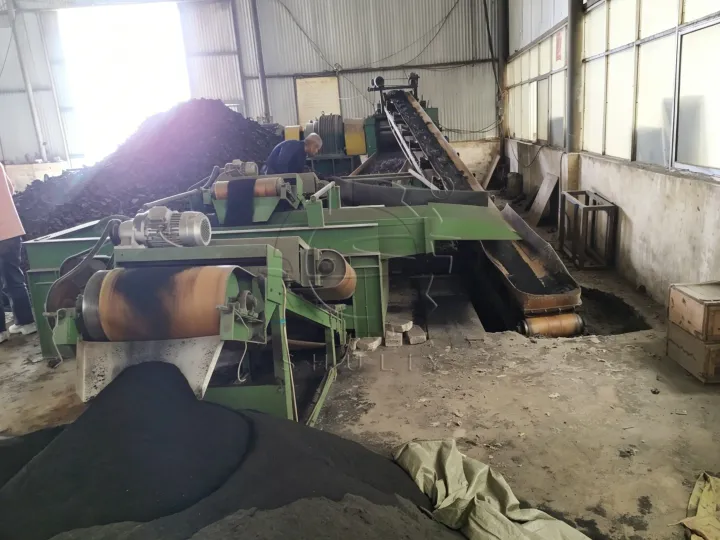
A complete system can include:
- Tire grinding machine
- Vibrating screen
- Magnetic separator
- Conveying equipment
- Other equipment required for the specific production process
Shuliy’s rubber powder system integrates grinding, screening, and magnetic separation rather than relying on a standalone grinder.
Therefore, two quotations may look very different simply because they are not offering the same equipment configuration.
When comparing prices, check the quotation line by line.
A lower machine price may not necessarily represent a lower total investment if important auxiliary equipment is excluded.
4. Steel-Wire Separation Can Affect the Configuration
Scrap tires contain steel wire, making separation an important part of rubber powder production.
Shuliy’s system uses magnetic separation to remove steel wire from the processed rubber, with multiple magnetic separation stages incorporated into the system.
If your target product is clean, wire-free rubber powder, the separation system should be considered when comparing the tyre rubber powder making machine price.
Instead of asking only:
“How much is the grinder?”
Ask:
“What separation system is included in the quotation, and what level of finished-product cleanliness can it achieve?”
This gives you a much more useful basis for comparing suppliers.
5. Feedstock and Input Size Matter
The type and condition of your raw material can also affect the recommended equipment configuration.
Shuliy’s rubber grinding system can process rubber from passenger car tires, truck tires, OTR tires, and certain industrial rubber waste. The grinding stage is designed to process approximately 30–100 mm rubber blocks into finer rubber granules. This means that if your project starts with complete scrap tires, you may need additional upstream equipment before the grinding stage.
For an accurate quotation, provide information such as:
- Tire type
- Available tire supply
- Input rubber size
- Required output
- Target mesh size
- Desired steel separation
- Expected working hours
The more complete the information, the more accurately the supplier can recommend the right configuration.
6. Why Do Tire Rubber Powder Machine Quotations Differ?
When comparing suppliers, buyers may receive very different quotations for what appears to be the same machine.
This can happen because of differences in:
Capacidade: Larger production requirements need larger equipment.
Mesh size: Finer rubber powder can reduce output and may require a different screening configuration.
System configuration: One quotation may include grinding, screening, and magnetic separation, while another may only include the grinder.
Raw material preparation: Complete tires may require additional shredding or granulation equipment before grinding.
Automation: Different levels of automation can change the overall system configuration and investment.
Therefore, comparing only the final price can be misleading.
7. How to Compare Tyre Rubber Powder Making Machine Prices
Before choosing the cheapest quotation, compare the following items:
| What to Compare | Questions to Ask |
|---|---|
| Capacidade | How many kg/h at my required mesh size? |
| Mesh size | Can the machine produce my target particle size? |
| Matéria-prima | What tire sizes and rubber blocks can it process? |
| Magnetic separation | How is steel wire removed? |
| Screening | What screening system is included? |
| Configuration | Is this a single machine or a complete system? |
| Maintenance | Which components are wear parts? |
| Suporte | Is installation and technical guidance available? |
This approach helps you compare the actual value of the equipment, rather than simply comparing numbers on different quotations.
8. How Much Should You Budget?
There is no single standard tyre rubber powder making machine price because every project has different production requirements.
For example, a small operation producing several hundred kilograms per hour will require a different machine from a large plant targeting more than 1 ton per hour.
The most practical way to obtain a meaningful quotation is to provide three basic details:
1. Required capacity
For example, 500 kg/h, 1 ton/h, or 2 tons/h.
2. Required mesh size
For example, 10 mesh, 20 mesh, 30 mesh, or 40 mesh.
3. Tire type
Passenger car tires, truck tires, OTR tires, or other rubber waste.
Based on these details, the supplier can recommend a suitable machine model and configuration instead of giving you a generic price.
Conclusão
The tyre rubber powder making machine price is determined by much more than the grinding machine itself.
Production capacity, final mesh size, raw material, screening, magnetic separation, and the overall system configuration can all affect the final investment.
For this reason, the cheapest quotation is not always the most economical choice.
Instead, compare capacity at your required mesh size, included equipment, finished-product requirements, and long-term operating needs.
If you are planning a tire recycling or rubber powder production project, send us your target capacity, required mesh size, and tire type. Shuliy can recommend a suitable rubber powder grinding system and provide a customized quotation for your project.