Tire Cutting Machine vs Tire Shredder: What’s the Difference?
If you’re starting a tire recycling business, you’ve probably heard both terms: tire cutting machine and tire shredder. But what exactly is…
If you’re starting a tire recycling business, you’ve probably heard both terms: tire cutting machine and tire shredder. But what exactly is the difference? And which one do you actually need?
Many beginners get confused. Some think they can skip the cutting stage and go straight to shredding. Others spend money on equipment they don’t need yet. This guide breaks it down simply.
What Is a Tire Cutting Machine?
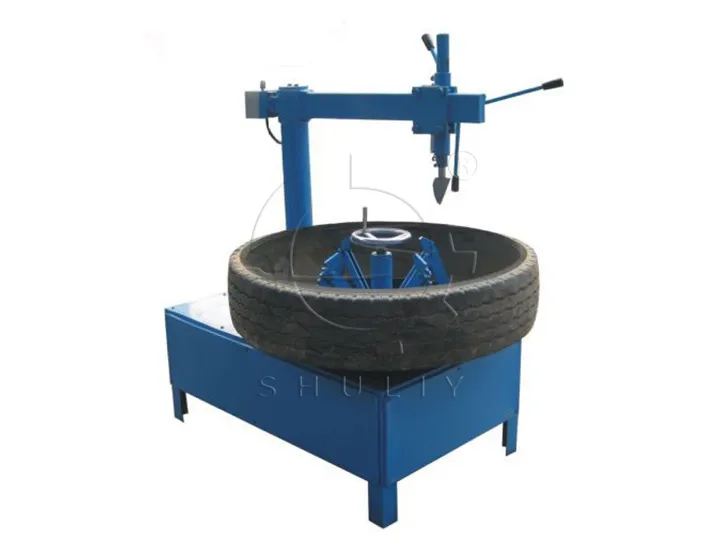
A tire cutting machine, also known as a tire cutter or scrap tire cutting machine, is the first piece of equipment in most recycling lines. Its main job is simple: take whole tires and cut them into smaller, more manageable pieces.
Think of it like this. A typical passenger car tire weighs about 9 kg. A truck tire can weigh 50 kg or more. Trying to feed something that big directly into a shredder is like trying to swallow a whole apple in one bite. It doesn’t work well.
The cutting machine slices the tire into chunks. These chunks are typically 50 to 900 mm in size, depending on your settings. Once the tire is cut into pieces, the next stages become much easier.
What Does a Tire Cutting Machine Do?
What Is a Tire Shredder?
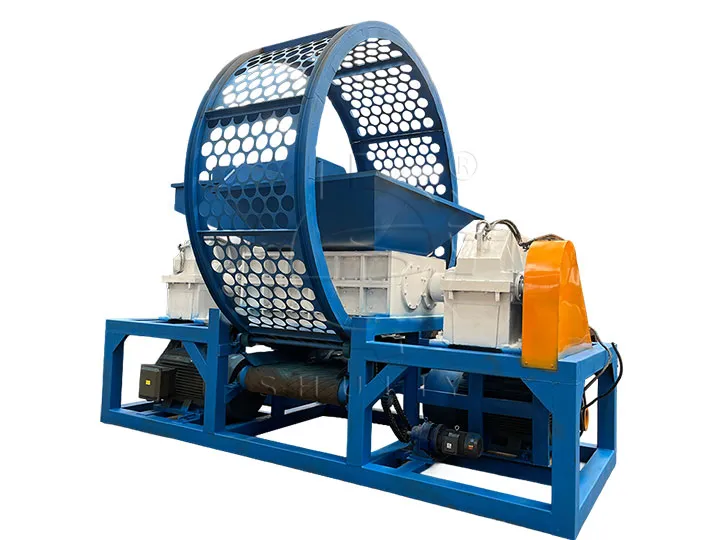
A tire shredder, sometimes called a tire shredding machine or rubber shredder, takes things a step further. While the cutting machine makes tires smaller, the shredder makes them tiny.
The shredder uses powerful blades to rip and tear the rubber into small pieces. Output size typically ranges from 10mm to 100mm. These small pieces are what become rubber mulch, crumb rubber, or rubber powder.
What Does a Tire Shredder Do?
Key Differences: Tire Cutting Machine vs Tire Shredder
Here’s the simple version: a tire cutting machine is for preprocessing. A tire shredder is for primary processing. They serve different purposes in the recycling line.
| Feature | Tire Cutting Machine | Tire Shredder |
| Primary Purpose | Preprocessing – makes tires smaller | Primary processing – turns pieces into fragments |
| Output Size | 50-900mm (chunks) | 10-100mm (small pieces) |
| Processing Stage | First stage | Second or third stage |
| Blade Type | Sharp blades for slicing | Heavy-duty blades for tearing |
| Power Required | Lower (7.5-22 KW) | Higher (64-328 KW) |
Can You Skip the Cutting Machine?
Short answer: you could, but you shouldn’t.
Here’s why. When you try to shred whole tires or large pieces, several bad things happen. First, your shredder blades wear out much faster. Those blades are expensive. Replacing them every few weeks instead of every few months costs a fortune. Second, you get more jams and blockages. That means more downtime and lost production. Third, your throughput drops significantly. A properly pre-cut tire processes much faster than a whole one.
Think of it like cooking. You could put a whole chicken in a food processor. But chopping it into pieces first makes everything easier, faster, and produces better results. Same idea with tire recycling.
Which Equipment Do You Need?
The answer depends on your goals.
If You Want Rubber Powder
You’ll need both. The cutting machine prepares the tires. The shredder breaks them down. Then you’ll need a grinding and screening system to produce the final powder. That’s the complete production line.
If You Want Tire Chips or Mulch
You might be able to skip the grinding stage. A good cutting machine can produce chips in the 30-50mm range. That’s suitable for some applications like playground surfaces or asphalt modification.
If You Only Have Small Tires
Even for passenger car tires, we still recommend a cutting machine. It dramatically improves efficiency and extends the life of your shredder. The small investment pays for itself quickly.
Recommended Setup
For most tire recycling operations, here’s what we recommend:
- Tire cutting machine – The first step. Cuts tires into manageable pieces.
- Tire shredder – Breaks the pieces into smaller fragments.
- Rubber grinding and screening system – Produces the final powder or chips.
This three-stage setup gives you maximum efficiency, lowest operating costs, and the best end product quality.
Conclusion
Both tire cutting machines and tire shredders are essential parts of a tire recycling line. They’re not interchangeable. The cutting machine handles preprocessing. The shredder handles primary size reduction. Skip neither if you want the best results.
Need help figuring out the right equipment for your specific situation? Our tire cutting machine page has detailed specifications. Or contact us directly – we’re happy to help you choose.